
Lindleys: Consolidating warehouse, reporting and compliance visibility.
Lindleys operates in a distribution environment where warehouse execution, quality controls and reporting discipline all need to move together. The business required a stronger operational spine so inventory status, compliance evidence and management reporting remained consistent from goods-in to dispatch.
The operating environment.
Lindleys needed dependable visibility across goods-in, quarantine, release status, stock movement, quality exceptions and service performance. Critical information existed, but it was distributed across operational systems, local files and manual consolidation steps.
As transaction volume increased, the gap between operational reality and management reporting widened. Teams were spending significant effort reconciling data rather than acting on it, especially around stock status transitions and exception handling.
What needed to change.
The core challenge was latency and inconsistency between warehouse events, quality decisions and reporting outputs.
- Commercial and planning teams did not always have a clear, current view of what stock was available, blocked or awaiting release.
- Quality and compliance exceptions were logged in parallel processes, reducing traceability during investigations and audit prep.
- Excel reporting relied on repetitive extraction, reshaping and validation effort each cycle.
- Power BI dashboards were informative but often lagged behind live warehouse and quality activity.
How MediFlo-AI was implemented.
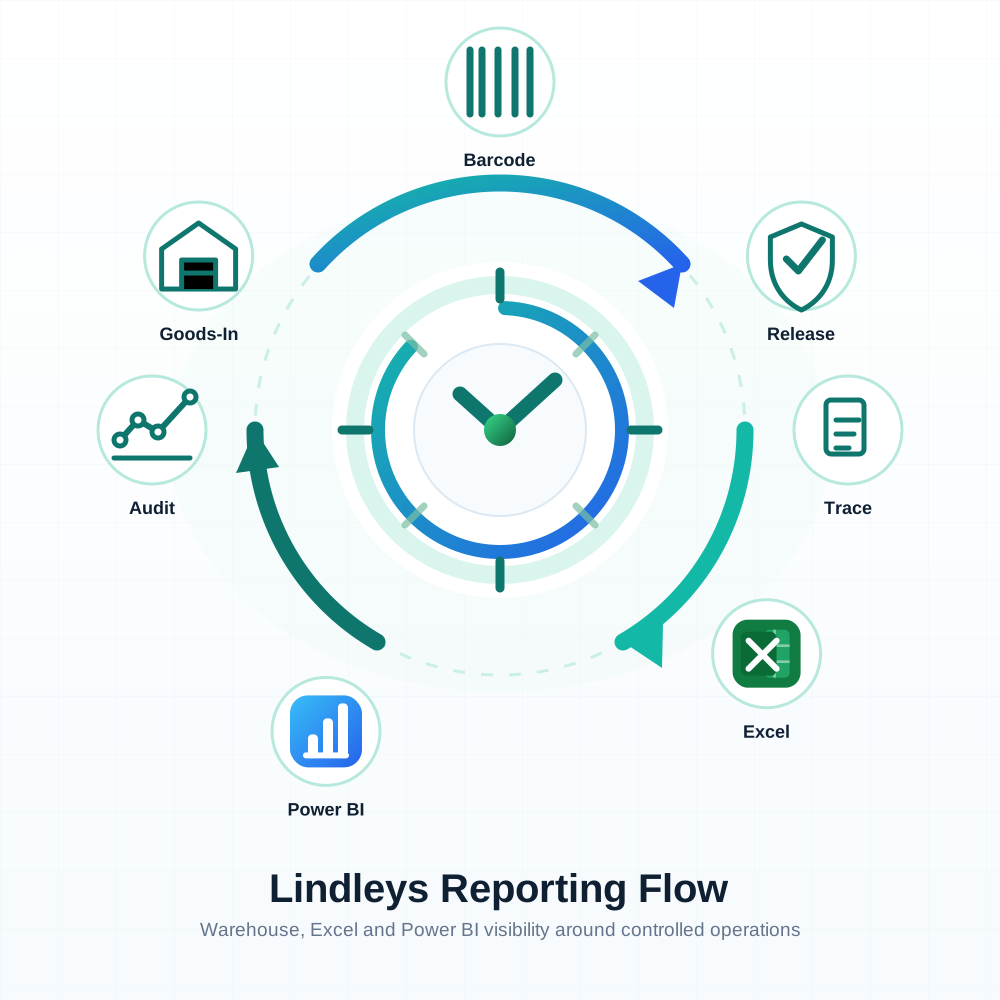
MediFlo-AI was introduced as a connected operating layer linking warehouse execution, compliance controls and reporting outputs.
- Structured warehouse workflows across receipt, quarantine, FEFO allocation, picking and dispatch with explicit status transitions.
- Barcode and batch traceability captured at each key movement to improve recall readiness and stock accountability.
- Quality and compliance exceptions linked directly to affected batch, product and transaction history.
- Operational dataset prepared for Excel workflows and Power BI reporting with reduced manual transformation.
- Shared operational KPIs for release backlog, status ageing, exception volume and service performance.
Business impact.
- Improved day-to-day visibility of stock state from goods-in through released inventory and dispatch readiness.
- Reduced manual reconciliation workload across warehouse, quality and reporting teams.
- Stronger audit and inspection preparedness through linked operational and compliance evidence trails.
- More dependable Excel and Power BI outputs for weekly operational governance and planning cycles.
- Faster escalation of blocked stock and process bottlenecks through clearer shared metrics.