
N.S.L: Controlling parallel import risk from licence to sale.
N.S.L operates as a UK parallel importer where packs are sourced from EEA markets, assessed for UK legal status, repackaged under controlled artwork and PIL workflows, then released through QP/RP governance before commercial sale. The operating model depends on tight coordination between regulatory, quality, warehouse and sales teams so no stock is offered before release and market eligibility checks are complete.
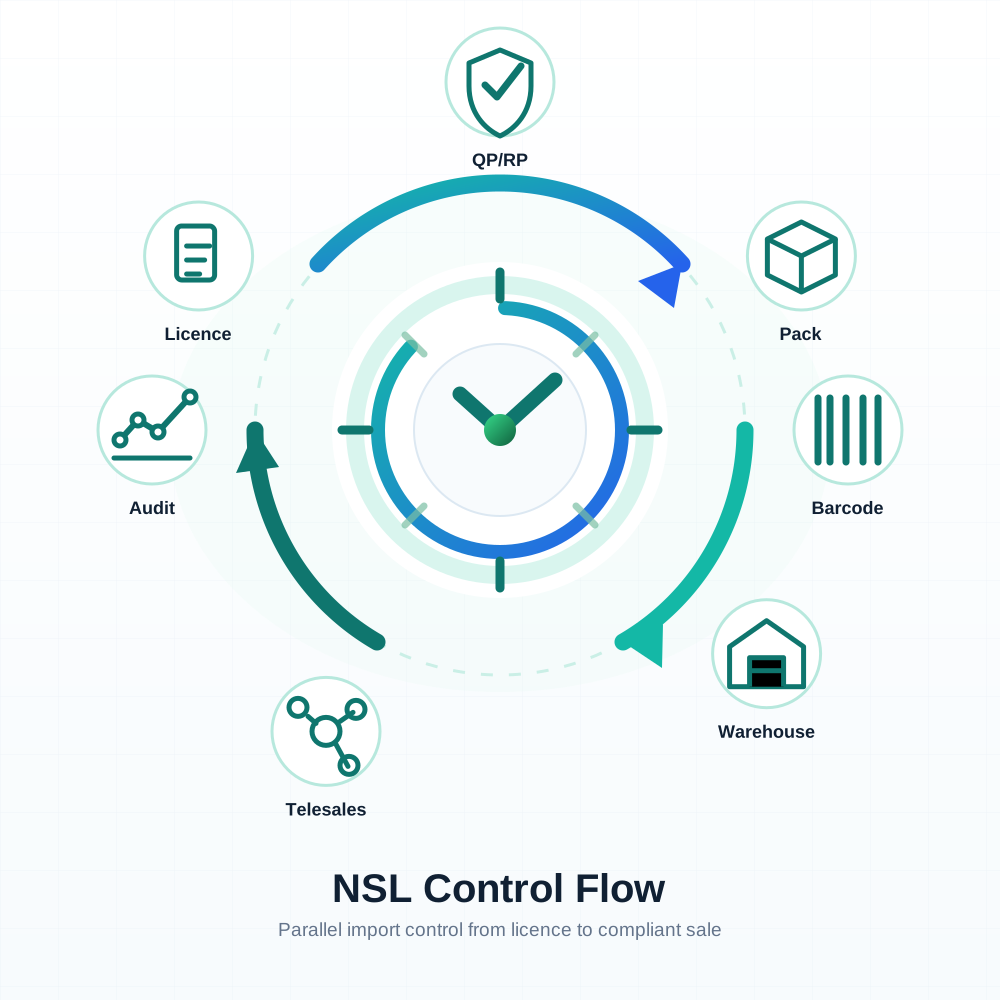
The operating environment.
N.S.L imports product from multiple EEA territories and manages each line through a regulated UK workflow: licence eligibility checks, variation control, artwork/PIL approval, batch-level release evidence, and controlled transfer to saleable stock. Each step must stand up to MHRA inspection and internal QA review.
Before consolidation, key controls existed but were spread across email approvals, shared drives and disconnected spreadsheets. That made handoffs slower, increased dependency on key individuals, and created avoidable risk at the point where compliance status and commercial urgency meet.
What needed to change.
The core issue was not lack of effort; it was control fragmentation across teams and systems at critical decision points.
- Commercial teams needed a definitive view of saleable stock by batch, not partial views split across warehouse and quality records.
- Regulatory and QA teams needed traceable evidence that licence checks, artwork/PIL approval and QP/RP release were complete before customer allocation.
- Warehouse operations needed barcode, batch and status controls linked to each movement so quarantine, hold and released stock could not be confused.
- Leadership needed near real-time reporting on blocked stock, pending releases, and expiry exposure to make better purchasing and sales decisions.
How MediFlo-AI was implemented.
MediFlo-AI was implemented as the single control layer linking regulatory compliance, quality release, warehouse execution and commercial visibility.
- Licence-first workflow: supplier, product and customer eligibility validated and time-stamped before stock can progress.
- QP/RP release gate: electronic release evidence linked to batch records, with hold/reject controls enforced in downstream stock views.
- Artwork and PIL governance: version-controlled pack content with approval history tied directly to affected SKUs and batches.
- Warehouse traceability: barcode and batch scanning at receipt, movement and dispatch with status-aware controls across quarantine, hold and released inventory.
- Commercial guardrails: telesales and CRM views restricted to compliant customers and released stock, preventing premature offers.
- Management reporting: operational data fed to Excel and Power BI outputs for release backlog, stock risk and service-level tracking.
Business impact.
- Reduced release-to-sale latency by removing manual reconciliation between QA, warehouse and sales teams.
- Improved inspection readiness through a clearer evidence trail spanning licence decisions, pack approvals and QP/RP release records.
- Lowered risk of non-compliant offers by enforcing released-stock and customer-eligibility checks in commercial workflows.
- Improved visibility of blocked, released and at-risk stock, supporting faster action on short-dated inventory.
- Created a more reliable reporting baseline for operational governance and commercial planning across the parallel import lifecycle.